
Rice Mill Machine and Dhaan Kutti Machine
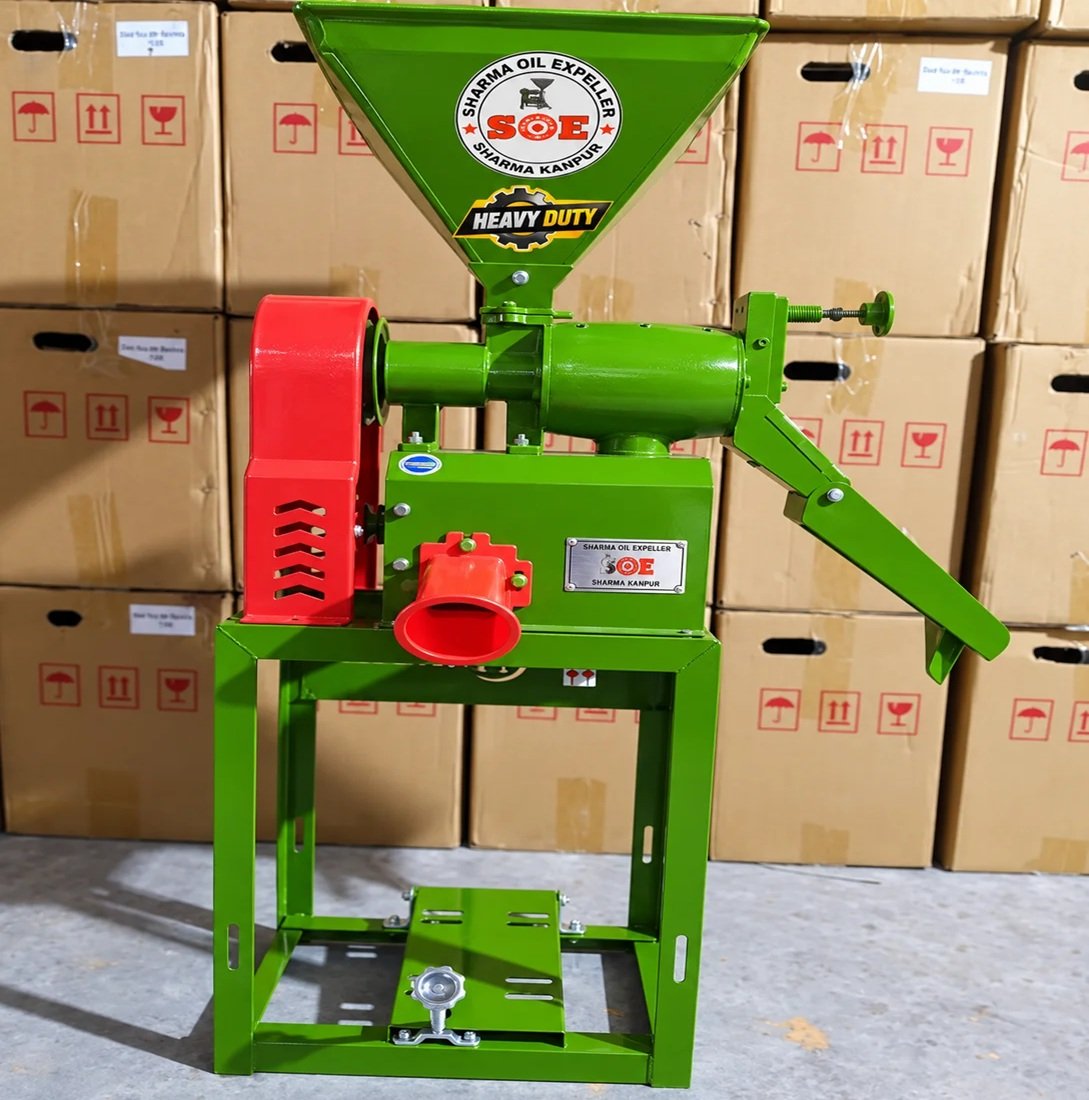
3 HP Rice Mill Machine
Rice Mill Machine efficiently cleans, dehusks, whitens, and polishes paddy to produce high-quality, clean, and market-ready rice with minimal wastage. Capacity is 150 to 170 kg per hour.
Contact Us
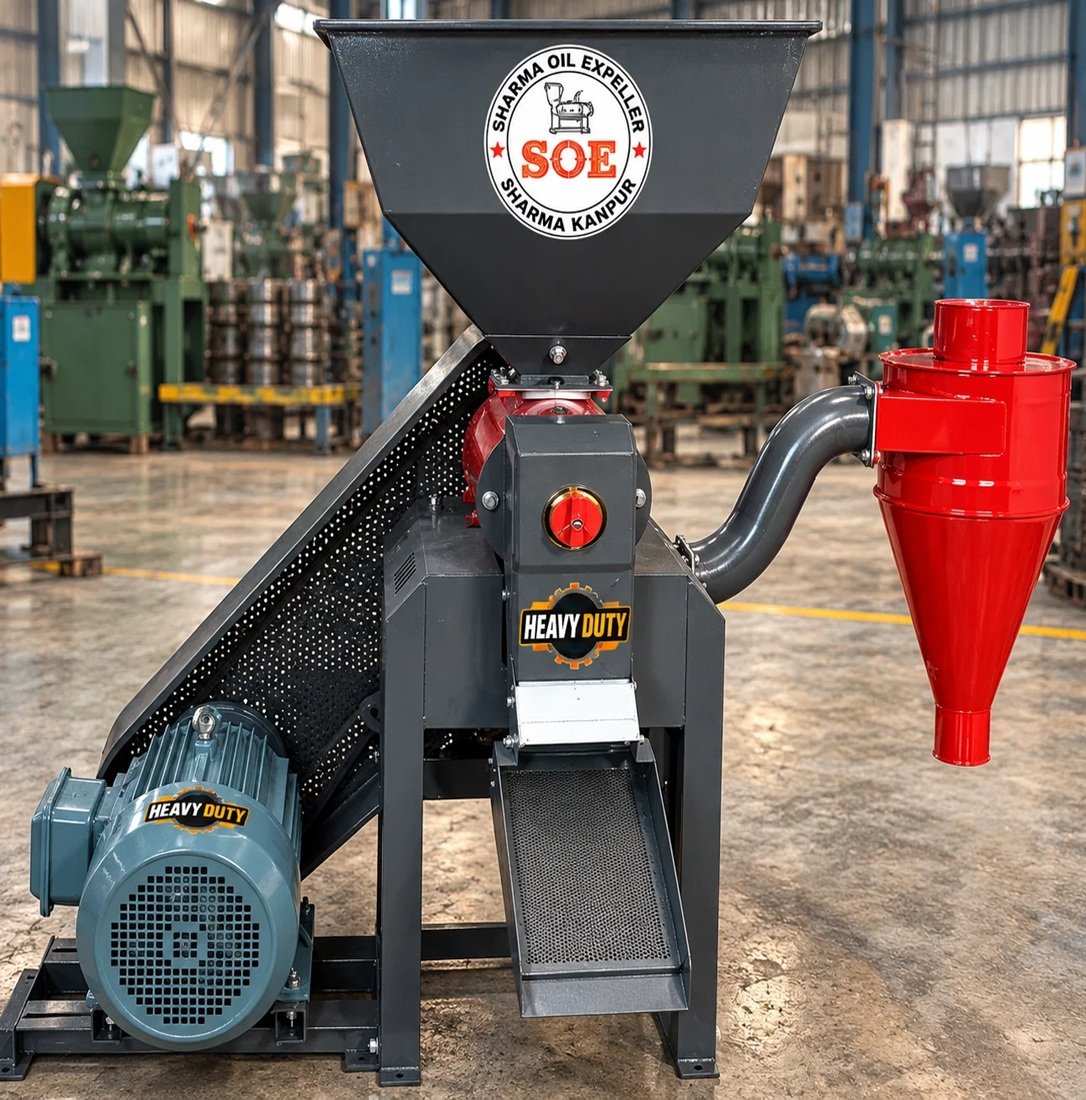
7.5 HP Rice Mill Machine
Rice Mill Machine efficiently cleans, dehusks, whitens, and polishes paddy to produce high-quality, clean, and market-ready rice with minimal wastage. Capacity is 350 to 400 kg per hour.
Contact Us
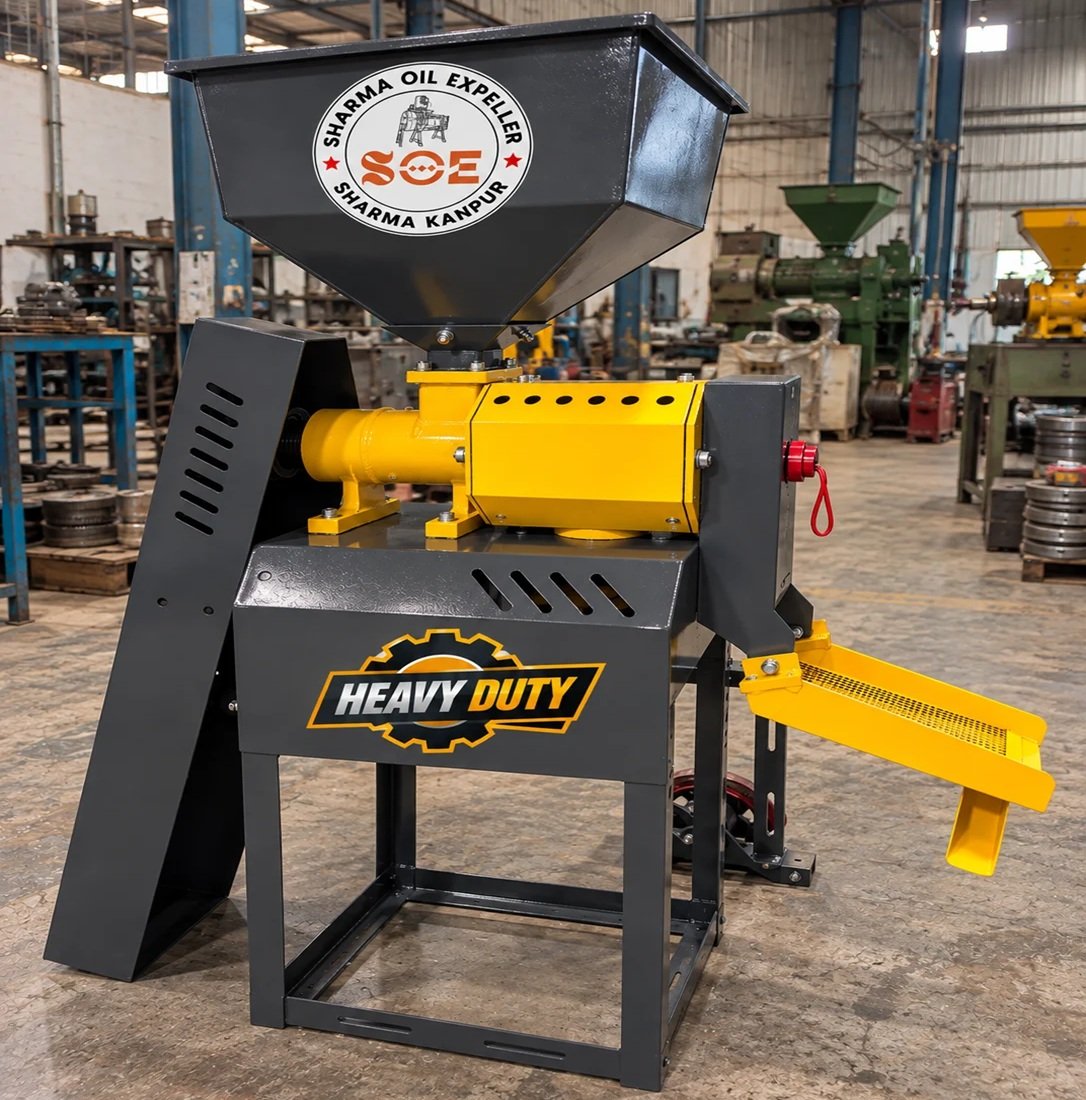
10 HP Rice Mill Machine
Rice Mill Machine efficiently cleans, dehusks, whitens, and polishes paddy to produce high-quality, clean, and market-ready rice with minimal wastage. Capacity is 500 to 550 kg per hour.
Contact Us
Sharma Oil Expeller - Rice Mill Machine Running Videos
Rice Mill Machine – Types, Features, Benefits and Uses | Sharma Oil Expeller
Introduction to Rice Mill Machine
A Rice Mill Machine is an essential piece of equipment for processing paddy into rice. It helps remove the outer husk from paddy grains and, depending on the machine design, may also support further processing, such as separating husk from rice and improving the overall quality of the final product. Rice milling plays an important role in agriculture, food processing, and the rice trading business.
Rice is one of the most widely consumed staple foods in India. From small villages and agricultural communities to large commercial markets, rice is an important part of everyday life. Farmers, grain traders, small business owners, and rice processing units all need reliable equipment to process paddy efficiently. A suitable rice mill machine can help reduce manual work, improve processing convenience, and support regular production.
For people planning to start a rice milling business, selecting the right machine is an important decision. Motor capacity, machine design, production requirements, available space, power supply, and expected workload should all be considered before making a purchase.
Sharma Oil Expeller offers rice mill machines and Dhaan Kutti machines for customers looking for practical grain-processing equipment. Whether you need a compact 3 HP Rice Mill Machine for small-scale work or a higher-powered 10 HP Rice Mill Machine for more demanding processing requirements, Sharma Oil Expeller can help you explore suitable machine options.
This guide explains the different types of rice mill machines, including 3 HP, 5 HP, 7.5 HP, and 10 HP models, along with their features, uses, benefits, and important purchasing considerations.
What Is a Rice Mill Machine?
A Rice Mill Machine is a mechanical device used to process paddy and separate the rice grain from its outer husk. Depending on its construction and configuration, a machine may perform one or more stages of rice processing.
Traditional rice processing methods required considerable manual effort and time. Modern rice mill machines make the process more convenient by using a motor-driven mechanism to process grain more consistently.
Rice milling equipment is used by farmers, agricultural businesses, rice traders, small entrepreneurs, food-processing units, and commercial rice mills. Different machines are designed for different production requirements, so the ideal model depends on the amount of paddy that needs to be processed.
Some machines are compact and suitable for small-scale applications, while others are designed for longer operating hours and heavier workloads.
When choosing a Rice Mill Machine, it is important to understand whether you need a basic Dhaan Kutti machine, a paddy husker, a rice polishing machine, or a more complete rice milling system. These machines perform different functions, and not every model carries out all stages of rice processing.
What Is a Dhaan Kutti Machine?
A Dhaan Kutti Machine is commonly used to process paddy or dhan by removing its outer husk and separating the rice grain. In many Indian markets, the term Dhaan Kutti refers to compact rice-processing equipment used by farmers, rural entrepreneurs, and small rice milling businesses.
Dhaan Kutti machines are useful where customers need a practical solution for processing paddy without investing immediately in a large industrial rice mill.
These machines can be suitable for agricultural areas, grain shops, small processing units, and local businesses that provide paddy processing services.
Depending on the model, a Dhaan Kutti machine may include a motor, processing chamber, feeding arrangement, discharge outlet, and other mechanical components. The exact configuration varies by manufacturer and machine type.
Before buying a Dhaan Kutti machine, customers should check the type of grain it can process, its expected output, the quality of husk separation, power requirements, and the availability of spare parts.
Sharma Oil Expeller offers Dhaan Kutti and Rice Mill Machine options for customers looking for grain-processing equipment for different business requirements.
Types of Rice Mill Machines Available at Sharma Oil Expeller
Rice mill machines are available in different motor capacities and designs. Motor horsepower is one of the factors used to compare machines, but horsepower alone does not determine actual production capacity.
The following are four common capacity categories to consider when selecting a Rice Mill Machine:
- 3 HP Rice Mill Machine
- 5 HP Rice Mill Machine
- 7.5 HP Rice Mill Machine
- 10 HP Rice Mill Machine
Each option can suit a different operating requirement. The right choice depends on the quantity of paddy you plan to process, your working hours, the machine's processing mechanism, and your available electrical supply.
1. 3 HP Rice Mill Machine
Introduction to the 3 HP Rice Mill Machine
A 3 HP Rice Mill Machine is an option worth considering for small-scale rice processing. It is designed for buyers who need a relatively compact machine for limited or moderate workloads.
Small farmers, village-level entrepreneurs, local grain processors, and businesses entering the rice milling industry may consider this motor category, provided the selected model matches their actual processing needs.
A 3 HP machine can be useful when the objective is to process paddy in manageable batches rather than operate a large commercial milling line.
Features of a 3 HP Rice Mill Machine
The features of a 3 HP rice mill depend on the particular model and manufacturer. Buyers should look for a suitable motor, a durable processing mechanism, convenient feeding and discharge arrangements, and components that are easy to inspect and maintain.
Important features to check include:
- Motor power of 3 HP.
- A design suited to the intended volume of paddy processing.
- Convenient grain feeding and collection.
- Accessible maintenance points.
- Suitable electrical protection and safety guards.
- Availability of replacement parts and technical support.
Customers should verify the machine's dimensions and installation requirements before purchasing.
Benefits of a 3 HP Rice Mill Machine
Suitable for small-scale processing: A 3 HP machine may suit customers who process relatively small quantities of paddy or provide local processing services.
Compact installation: Depending on the design, a smaller machine may require less floor space than larger commercial equipment.
Convenient operation: A straightforward machine design can make routine operation easier for users who receive proper training.
Useful for business trials: Entrepreneurs exploring local demand for rice processing may consider a smaller machine before expanding their operations.
Potentially lower initial investment: Smaller-capacity machines may cost less than larger systems, although the actual purchase price depends on the model, construction, included equipment, and supplier.
Who Should Consider a 3 HP Rice Mill Machine?
A 3 HP model may be worth evaluating for small farmers, local paddy processors, small grain businesses, and entrepreneurs with limited daily processing requirements.
It is particularly important to compare the manufacturer's rated throughput with your expected daily workload. If your customers require high volumes or rapid turnaround, a larger machine may be more suitable.
Buying a 3 HP Rice Mill Machine from Sharma Oil Expeller
Sharma Oil Expeller provides customers with rice-processing machine options for different business needs. Buyers interested in a 3 HP Rice Mill Machine should ask about the machine's construction, processing capacity, power requirements, installation, and service support before confirming an order.
The goal is to select equipment that fits your workload rather than purchasing a machine based only on its horsepower rating.
2. 5 HP Rice Mill Machine
Introduction to the 5 HP Rice Mill Machine
A 5 HP Rice Mill Machine may be suitable for customers who need more processing capability than a compact entry-level machine can provide.
This motor category can be considered by small commercial processors, agricultural businesses, grain traders, and entrepreneurs who expect regular paddy-processing work.
The actual performance of a 5 HP machine depends on the processing mechanism, grain condition, machine design, operating settings, and whether additional stages such as polishing or grading are included.
Features of a 5 HP Rice Mill Machine
When comparing 5 HP models, customers should examine the machine's construction, motor specifications, processing chamber, grain-feeding mechanism, and discharge system.
- 5 HP motor rating.
- Construction appropriate for the intended workload.
- Efficient feeding and discharge arrangements.
- Accessible components for cleaning and servicing.
- Suitable electrical protection.
- Availability of technical assistance and spare parts.
The manufacturer should provide the rated processing capacity and clarify the conditions under which that figure was measured.
Benefits of a 5 HP Rice Mill Machine
Suitable for growing businesses: A 5 HP machine may be appropriate for an entrepreneur whose paddy-processing workload has increased beyond occasional or very small batches.
Support for regular operation: The suitability of a machine for daily use depends on its design and duty rating. Buyers should confirm that the selected model is intended for their planned operating hours.
Flexible applications: Depending on its configuration, a rice mill can support small agricultural businesses, local grain processors, and rice-processing service providers.
Opportunity to serve local customers: A properly planned milling business can provide paddy-processing services to nearby farmers and grain traders.
Scope for future expansion: Customers who anticipate growth should consider whether the selected machine can fit into a larger processing setup later.
Who Should Consider a 5 HP Rice Mill Machine?
A 5 HP Rice Mill Machine may be worth evaluating for small commercial rice processors, local grain shops, village entrepreneurs, and businesses with regular but moderate processing needs.
If your operation requires multiple stages of milling, ask whether the machine includes those stages or whether separate equipment is required.
5 HP Rice Mill Machine for Small Business
Starting a rice milling business involves more than buying a machine. You should consider paddy availability, electricity costs, operator wages, space, transport, maintenance, and local customer demand.
Before investing, estimate how much paddy you can process each day and how much customers are willing to pay for the service. Use the machine's verified throughput to estimate operating hours and avoid relying on unsupported production claims.
Sharma Oil Expeller offers rice mill and Dhaan Kutti machine options for customers planning small-scale grain-processing operations.
3. 7.5 HP Rice Mill Machine
Introduction to the 7.5 HP Rice Mill Machine
A 7.5 HP Rice Mill Machine is a motor-capacity category that buyers may consider when their processing requirements are greater than those of smaller machines.
This option can be relevant to growing rice-processing businesses, grain merchants, agricultural entrepreneurs, and operators handling regular quantities of paddy.
However, a 7.5 HP motor does not automatically guarantee a specific quantity of rice per hour. Production depends on the machine's design, the condition and moisture content of the paddy, the desired output quality, and the configuration of the processing system.
Features of a 7.5 HP Rice Mill Machine
A suitable 7.5 HP model should have a processing mechanism designed for its rated workload, a compatible motor and drive system, and practical arrangements for feeding and collecting grain.
- 7.5 HP motor capacity.
- Machine frame and component quality.
- Rated paddy-processing throughput.
- Husk removal and separation performance.
- Ease of cleaning and maintenance.
- Electrical requirements and safety provisions.
- Service availability and spare-parts support.
Where the machine will run for several hours each day, its intended duty cycle and cooling arrangements are especially important.
Benefits of a 7.5 HP Rice Mill Machine
Suitable for increased processing demand: A 7.5 HP model may be worth considering when a business regularly processes more paddy than a smaller unit can comfortably handle.
Potential for improved workflow: A well-planned setup can reduce unnecessary grain handling and make the movement of paddy and processed rice more convenient.
Support for expanding businesses: Entrepreneurs can evaluate this motor category when planning to serve a larger local customer base.
Useful for regular agricultural processing: Depending on the model's specifications, a machine may support recurring processing requirements during harvest and other operating periods.
Integration with other equipment: Some businesses may combine a rice mill with grain cleaners, elevators, graders, or other processing equipment. Compatibility should be checked before purchasing.
Who Should Consider a 7.5 HP Rice Mill Machine?
This motor category may be suitable for established local processors, growing grain businesses, and customers whose daily workload justifies a larger machine.
Before selecting a model, compare its verified throughput with your required daily production. Also consider whether the available electrical connection can safely support the motor and associated equipment.
7.5 HP Rice Mill Machine for Commercial Applications
Commercial rice processing requires consistency, proper grain handling, and a clear understanding of production costs.
Operators should monitor the amount of paddy processed, the quantity of saleable rice obtained, the amount of broken rice and husk, and the time spent cleaning and maintaining the equipment.
These measurements help determine whether the machine is suitable for the business and whether production targets are realistic.
Sharma Oil Expeller helps customers explore rice mill and Dhaan Kutti machine options based on their intended use and operational requirements.
4. 10 HP Rice Mill Machine
Introduction to the 10 HP Rice Mill Machine
A 10 HP Rice Mill Machine is an option for buyers evaluating higher motor capacity for regular or more demanding rice-processing work.
It may be worth considering for commercial grain processors, established agricultural businesses, rice traders, and entrepreneurs planning a larger processing operation.
The exact capability of a 10 HP machine depends on its engineering, processing technology, feeding system, and operating conditions. Customers should request the manufacturer's rated throughput rather than assuming that every 10 HP machine delivers the same output.
Features of a 10 HP Rice Mill Machine
A 10 HP machine should be evaluated according to its complete technical specifications rather than its motor rating alone.
- Motor power of 10 HP.
- A processing mechanism suited to the intended workload.
- Appropriate drive and transmission components.
- Feeding and discharge arrangements designed for regular use.
- Suitable machine guarding and emergency procedures.
- Maintenance access and spare-parts availability.
- Manufacturer guidance for installation and operation.
For commercial applications, ask about the recommended operating hours and whether the machine is designed for continuous or intermittent use.
Benefits of a 10 HP Rice Mill Machine
Suitable for larger workloads: A 10 HP model may be appropriate for businesses that require more processing capacity than a smaller unit can provide.
Potential for higher throughput: Higher motor capacity can support demanding processing requirements when the rest of the machine is engineered accordingly. Actual throughput must be verified for the specific model.
Support for commercial operations: A suitable machine can become part of a commercial grain-processing setup serving farmers, traders, and other customers.
Scope for a more organized workflow: When paired with suitable handling and collection arrangements, a rice mill can help improve the movement of grain through a processing unit.
Potential for business expansion: Customers planning long-term growth may evaluate a 10 HP machine alongside other equipment required for a complete processing line.
Who Should Consider a 10 HP Rice Mill Machine?
A 10 HP Rice Mill Machine may be worth evaluating for established processors, grain traders, and businesses expecting regular, comparatively demanding workloads.
The final choice should be based on actual production targets, paddy availability, electrical capacity, budget, and the space available for installation.
10 HP Rice Mill Machine for Commercial Rice Processing
For a commercial rice-processing business, machine selection is only one part of the investment decision. The operator must also plan for raw material procurement, storage, labor, electricity, maintenance, grain quality, and customer demand.
A larger machine may be unnecessary if the business cannot obtain enough paddy to keep it productively occupied. On the other hand, a machine that is too small may create delays when demand increases.
Sharma Oil Expeller offers customers machine options to help them evaluate suitable equipment for their rice-processing plans.
Difference Between 3 HP, 5 HP, 7.5 HP and 10 HP Rice Mill Machines
Choosing the correct motor capacity is easier when you compare the available options in relation to your actual workload.
| Feature | 3 HP Rice Mill | 5 HP Rice Mill | 7.5 HP Rice Mill | 10 HP Rice Mill |
|---|---|---|---|---|
| Motor rating | 3 HP | 5 HP | 7.5 HP | 10 HP |
| Typical buyer consideration | Small-scale processing | Growing small business | Higher regular workload | More demanding commercial use |
| Installation planning | Check available space | Check available space | Check layout and access | Check layout and handling arrangements |
| Electricity requirements | Verify nameplate | Verify nameplate | Verify nameplate | Verify nameplate |
| Production capacity | Confirm model rating | Confirm model rating | Confirm model rating | Confirm model rating |
| Maintenance | Follow manufacturer guidance | Follow manufacturer guidance | Follow manufacturer guidance | Follow manufacturer guidance |
The descriptions above are general buying guidance, not a guarantee of a specific production capacity. Exact performance, rice recovery, and power consumption should be confirmed with the supplier for the particular machine.
What Is the Difference Between a Rice Mill Machine and a Dhaan Kutti Machine?
The terms Rice Mill Machine and Dhaan Kutti Machine are sometimes used interchangeably in the Indian market, especially for smaller rice-processing equipment. However, their exact meaning can vary by region and manufacturer.
A Dhaan Kutti machine commonly refers to equipment used for processing paddy and removing its husk. A Rice Mill Machine may describe a broader range of equipment, from a compact milling unit to a more complete rice-processing system.
A complete rice mill may include several separate operations:
- Pre-cleaning: Removes unwanted material such as dust, straw, and other impurities.
- Husking: Removes the outer husk from paddy.
- Separation: Separates husk from the rice and remaining paddy.
- Whitening or polishing: Removes bran layers when required by the intended rice product.
- Grading: Separates rice according to size and quality.
- Packaging: Prepares processed rice for storage, distribution, or sale.
Not every compact Dhaan Kutti machine performs all these operations. If you need polished, graded, retail-ready rice, ask whether additional machines are necessary.
Applications of Rice Mill Machines
1. Farmers and Agricultural Communities
Farmers may use paddy-processing equipment to prepare harvested grain for consumption, storage, or sale. The appropriate equipment depends on the quantity of paddy and the desired quality of the finished rice.
2. Village-Level Rice Processing
In rural areas, a local rice-processing business can provide a service to farmers who do not own their own machinery. A suitable machine can help process grain for several customers.
3. Grain Shops and Traders
Grain traders may use milling equipment as part of a broader operation involving procurement, storage, processing, and distribution.
4. Small Rice Milling Businesses
Entrepreneurs can evaluate compact rice mill machines when planning a small processing unit. Business planning should include equipment cost, electricity, labor, maintenance, and the expected volume of customer orders.
5. Commercial Food Processing
Larger food-processing operations may use rice milling equipment as one stage in a more comprehensive production line. Additional machinery may be needed for cleaning, grading, polishing, and packaging.
6. Agricultural Cooperatives
Groups of farmers or cooperative businesses may consider shared equipment to process paddy for members. The investment decision should account for expected usage, operating responsibilities, and maintenance arrangements.
Benefits of Starting a Rice Milling Business
Rice is a staple food, and paddy processing is an important activity in many agricultural regions. For an entrepreneur with access to raw material and customers, a rice milling business may offer an opportunity to provide a useful local service.
However, profitability is not automatic. It depends on local demand, machine utilization, the processing fee or selling price, raw material costs, electricity expenses, labor, and other overheads.
1. Local Customer Demand
A business located near paddy-growing areas may be able to serve farmers and grain traders who need convenient processing services.
2. Service-Based Revenue
Depending on the business model, an operator may charge customers for processing their paddy instead of purchasing all the raw material directly.
3. Multiple Business Models
Some businesses provide milling services, while others purchase paddy, process it, and sell rice and by-products. Each model has different working-capital and risk requirements.
4. Scope for Expansion
As demand grows, a business may consider additional machinery or more comprehensive processing facilities. Expansion should follow demonstrated demand rather than assumptions about future sales.
5. Use of Processing By-Products
Rice husk and bran may have commercial uses depending on quality, local demand, and applicable handling requirements. Their sale should not be treated as guaranteed income without checking local markets.
How to Choose the Right Rice Mill Machine
Check the Required Processing Capacity
Estimate the amount of paddy you expect to process each day. Ask the manufacturer for the rated throughput under clearly stated operating conditions.
Remember that paddy throughput is not the same as the quantity of finished rice produced. Husk, bran, broken grains, and other losses affect the final output.
Consider the Type of Rice Processing Required
Determine whether you need only husk removal or whether you also require whitening, polishing, grading, or packaging.
A compact machine may perform a limited set of operations, while a complete rice mill may require several machines working together.
Check Motor Power and Electrical Supply
Confirm the rated voltage, phase, current, starting requirements, and recommended electrical protection. Have the electrical installation assessed by a qualified professional where necessary.
Do not assume that every 3 HP, 5 HP, 7.5 HP, or 10 HP machine has the same electrical requirements.
Evaluate Construction Quality
Ask about the materials used in the frame and processing components, the expected wear parts, and the maintenance schedule.
A durable machine should be appropriate for its intended operating conditions and supported by practical servicing arrangements.
Ask About Spare Parts and Service
Access to replacement parts and technical assistance can make a significant difference to the long-term usefulness of a machine.
Before purchasing, ask about warranty terms, service availability, maintenance instructions, and the expected availability of commonly replaced components.
Compare the Total Cost
The purchase price is only one part of the cost of owning a rice mill. You should also consider transportation, installation, electrical work, labor, electricity, maintenance, cleaning, and any additional processing equipment.
A lower initial price does not necessarily mean a lower total operating cost.
Why Choose Sharma Oil Expeller for Rice Mill Machines?
Sharma Oil Expeller is a machinery supplier and manufacturer brand associated with oil processing equipment and a wider range of machinery products. Customers interested in rice milling and Dhaan Kutti equipment can enquire about available models and specifications.
When buying a Rice Mill Machine, customers need clear information about the machine's intended use, motor rating, production capacity, operating requirements, and maintenance.
Sharma Oil Expeller aims to help customers explore equipment options for their individual processing needs.
A Range of Machine Options
Customers looking for different motor capacities can enquire about available 3 HP, 5 HP, 7.5 HP, and 10 HP Rice Mill Machine models. Availability and exact configurations should be confirmed before ordering.
Options for Different Business Sizes
A small entrepreneur may have different requirements from an established grain-processing business. Comparing several machine capacities can help buyers identify an option suited to their expected workload.
Practical Buying Guidance
Before finalizing a machine, buyers should understand its intended application, processing capacity, electrical requirements, and installation needs. Clear specifications make it easier to compare available models.
Focus on the Intended Application
A machine should be selected according to the work it is expected to perform. Buyers should confirm whether a particular model is designed for husking, rice milling, or another stage of grain processing.
Enquiry About Availability
Customers can contact Sharma Oil Expeller to ask about available Rice Mill Machine and Dhaan Kutti models, pricing, specifications, and delivery arrangements.
Maintenance Tips for Rice Mill Machines
1. Clean the Machine Regularly
Remove accumulated husk, grain residue, and dust according to the manufacturer's instructions. Always isolate the power supply before cleaning or inspecting internal components.
2. Inspect Wear Parts
Processing components can wear over time. Inspect them at the intervals recommended by the manufacturer and replace parts when necessary.
3. Check Fasteners and Moving Parts
Loose fasteners, unusual vibration, and abnormal noise can indicate a problem. Stop the machine and investigate safely instead of continuing operation under uncertain conditions.
4. Maintain the Motor
Follow the manufacturer's instructions for motor ventilation, bearings, lubrication, and electrical inspection. Electrical maintenance should be performed by a qualified person.
5. Avoid Overloading
Feed the machine according to its recommended operating conditions. Excessive feeding can affect performance and may increase wear or cause blockages.
6. Use Appropriate Grain Conditions
Paddy moisture and grain condition can affect husking, breakage, and processing performance. Follow the equipment manufacturer's guidance for the type of paddy being processed.
7. Follow Safety Instructions
Do not remove guards while the machine is running. Keep hands, loose clothing, and tools away from moving components, and ensure that operators are properly trained.
Common Mistakes to Avoid When Buying a Rice Mill Machine
Choosing Only by Horsepower
A higher HP rating does not automatically mean better rice quality or a guaranteed output. Compare the complete technical specifications.
Ignoring the Required Processing Stages
Some buyers assume that a single machine will clean, husk, polish, grade, and package rice. Verify exactly which operations the selected model performs.
Overlooking Electrical Requirements
An unsuitable electrical supply can create installation problems and operating interruptions. Confirm the electrical specifications before purchase.
Underestimating Maintenance Costs
Wear parts, routine servicing, and unexpected repairs should be included in the ownership budget.
Buying More Capacity Than Needed
A large machine may not be economical if the business cannot obtain enough paddy to keep it productively occupied.
Buying Too Little Capacity
A machine that cannot meet actual demand may create delays during busy periods. Estimate the expected workload carefully before choosing a model.
Frequently Asked Questions About Rice Mill Machines
1. What is a Rice Mill Machine used for?
A Rice Mill Machine processes paddy to remove its outer husk and prepare rice for further use. Depending on its design, additional equipment may be required for whitening, polishing, grading, or packaging.
2. What is a Dhaan Kutti Machine?
A Dhaan Kutti Machine is commonly used for processing paddy and removing its husk. The precise functions vary by machine model.
3. What is the difference between a 3 HP and a 5 HP Rice Mill Machine?
The machines have different motor ratings, but actual processing capacity depends on the complete machine design. Compare verified throughput, operating requirements, and intended applications before choosing.
4. Is a 7.5 HP Rice Mill Machine suitable for a business?
It may be suitable for a business with regular processing requirements, provided the machine's verified capacity, electrical requirements, and features match the workload.
5. Who should consider a 10 HP Rice Mill Machine?
A 10 HP model may be worth considering for a more demanding processing operation. The final choice should be based on the manufacturer's specifications and the business's actual production needs.
6. Does a Rice Mill Machine produce polished rice?
Not every rice mill machine includes a polishing function. Confirm whether the model performs husking only or whether it also includes whitening or polishing.
7. Can I start a rice milling business with a small machine?
A small machine may be appropriate for a limited-scale business, depending on local demand, operating costs, machine capacity, and the type of service offered.
8. How do I calculate rice mill profitability?
Estimate daily processing volume, revenue per unit processed, electricity costs, wages, maintenance, rent, transportation, and other expenses. Use realistic production figures supplied for the actual machine.
9. Does Sharma Oil Expeller sell Dhaan Kutti and Rice Mill Machines?
Customers can enquire with Sharma Oil Expeller about available Dhaan Kutti and Rice Mill Machine options, including models in different motor-capacity categories. Confirm current availability and specifications before ordering.
10. How do I choose the best Rice Mill Machine?
Start by estimating your workload, identifying the processing stages required, checking electrical requirements, and comparing verified production capacity, construction, service support, and total cost.
Buy Rice Mill Machine and Dhaan Kutti Machine from Sharma Oil Expeller
Choosing the right Rice Mill Machine is an important step for farmers, agricultural entrepreneurs, grain traders, and businesses planning to enter the rice-processing industry.
Whether you are exploring a 3 HP Rice Mill Machine for smaller workloads, a 5 HP machine for a growing business, a 7.5 HP model for regular processing, or a 10 HP machine for more demanding applications, the most important consideration is selecting equipment that matches your actual requirements.
A reliable purchasing decision begins with clear specifications, realistic production expectations, suitable electrical infrastructure, and access to maintenance support.
Sharma Oil Expeller offers customers the opportunity to enquire about available Dhaan Kutti and Rice Mill Machine options for different processing needs. Contact the company to discuss the available models, machine specifications, prices, installation requirements, and delivery details.
Choose your equipment based on verified performance and your business goals, and build a rice-processing operation around quality, consistency, and careful planning.
Final Conclusion
Rice milling is an important part of the agricultural supply chain, connecting paddy cultivation with the rice consumed by households and businesses. The right machine can make processing more convenient and help operators manage their workload efficiently.
The 3 HP, 5 HP, 7.5 HP, and 10 HP Rice Mill Machine categories provide different options to evaluate, but no single motor rating is best for every buyer. Processing capacity, grain quality, operating costs, electrical requirements, and the number of processing stages all matter.
For customers searching for a Rice Mill Machine, Dhaan Kutti Machine, or grain-processing equipment, Sharma Oil Expeller is a company to contact for information about available machinery and specifications.
Before making your final decision, compare the options carefully, verify the manufacturer's claims, and select a machine that supports your intended production volume and long-term business requirements.
Sharma Oil Expeller – Your Machinery Enquiry Destination for Rice Mill Machines and Dhaan Kutti Equipment.